Saving Our Descendants from Extinction
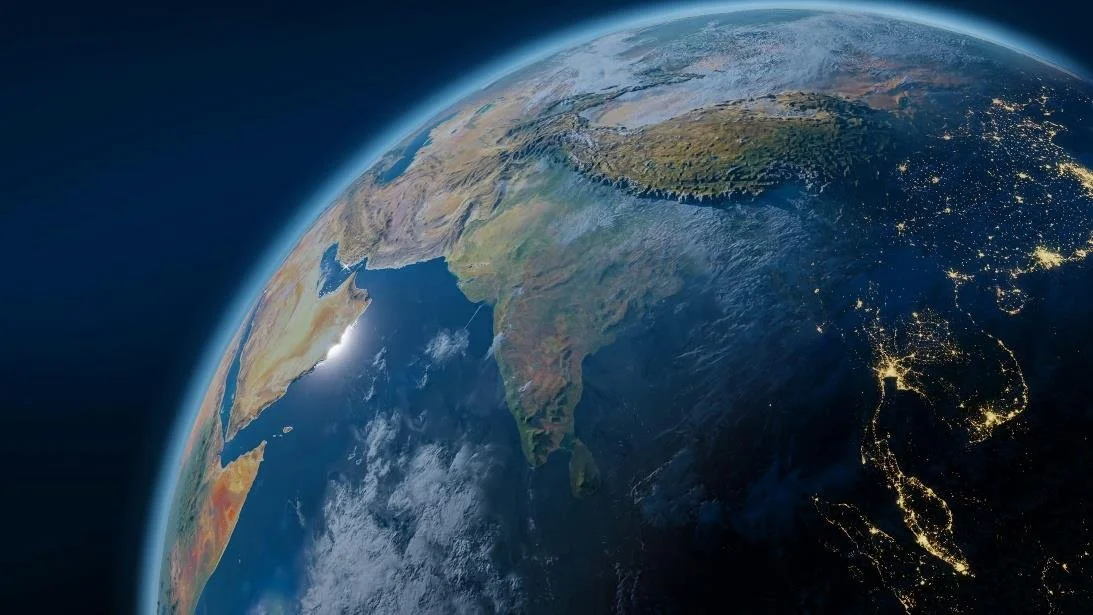
The impact of climate change is all around us. We see it in unprecedented heat waves and rainfalls. We hear about melting glaciers and shrinking rainforests, rising ocean temperatures, and thawing permafrost. Is it too much? Has it gone too far?
Johan Rockstrom, who is Director of Potsdam Institute for Climate Impact Research and Professor in Earth System Science at the University of Potsdam in Germany, has constructed a framework of 9 planetary boundaries that define the scientific guardrails and safe operating limits for our planet and for humanity. These boundaries are critical because they measure the physical and biological processes that regulate earth’s stability. Exceeding them risks abrupt, catastrophic environmental changes that threaten human civilization.
The ultimate goal of this framework is to preserve the conditions of the Holocene epoch—the last 11,700 years of earth’s history. This specific period is special because it featured an extraordinarily stable climate that allowed human-directed agriculture, cities, and modern civilization to arise. Scientists selected 9 specific variables because they are the characteristics and conditions of the earth that varied only minimally during the Holocene. They are the measures whose stability allowed the climate to remain stable. This stability allowed humanity to flourish.
The 9 boundaries are:
Climate change—the rising globl temperature driven by greenhouse gases.
Biosphere integrity (loss of biodiversity)—the decline and extinction of plant and animal species.
Land-system change—the conversion of forests and wild lands into farms or urban areas.
Freshwater use—the human consumption and alteration of global water systems.
Biogeochemical flows—the massive overload of nitrogen and phosphorus cycles from fertilizers.
Ocean acidification—the lowering of ocean pH as seas absorb excess carbon dioxide.
Atmospheric aerosol loading—the impact of air pollution and tiny particles on climate and health.
Stratospheric ozone depletion—the thinning of the ozone layer that protects earth from UV radiation, and
Novel entities (chemical pollution)—the release of new chemicals, plastics, and radioactive materials into the environment.
Characteristics of the 9 boundaries:
Tipping points: These 9 boundaries are unique because they do not change in a smooth, predictable, linear fashion. Instead, they exhibit non-linear behavior, meaning they can absorb stress for a long time until they hit a critical threshold (a tipping point). Once a tipping point is crossed, the system triggers rapid, self-reinforcing feedback loops. For example, atmospheric warming past a certain point thaws Arctic permafrost. The thawing permafrost releases massive amounts of methane, which cause more warming, completely escaping the earth’s ability to recover by itself, requiring our help to return to a safer level.
Global measures: Many environmental issues are local or regional. These 9 variables were selected because they operate at a global scale or aggregate to fundamentally alter the entire planet’s equilibrium. For example, atmospheric temperature and ocean acidification directly dictate how the planet traps heat and how marine ecosystems survive.
A living buffer: Biosphere integrity (biodiversity) serves as the planet’s immune system, absorbing shocks and maintaining ecological stability.
Global cycles: The cycling of freshwater, land use, nitrogen, and phosphorus form the literal plumbing of the planet, moving the nutrients and water required to sustain all life.
So, how are we doing in these 9 areas?
In 2021 a documentary was released, which is currently available on Netflix, titled Breaking Boundaries: the Science of our Planet. A book by the same name by Johan Rockstrom and Owen Gaffney is available from your library and from wherever books are sold. These are the story of Rockstrom’s work, spanning a 30 year period, to identify these 9 boundaries, to establish their connection to the stability of our planet, and to assess the health of each one. When the film was made, 4 of the 9 tipping points had been exceeded. Two of those are well known: rising global temperatures (climate change) and the decline and extinction of plant and animal species (biosphere integrity). Two lesser known systems—the conversion of forests and wild lands to human use and the overload of nitrogen and phosphorus from fertilizer—were also crossed. In the five years since this film as made, three more boundaries have been crossed—freshwater use, ocean acidification and the release of new chemicals, plastics and radioactive materials into the environment. The situation is truly critical.
But there is hope as well. In the 1980s, the increased use of chlorofluorocarbons (CFCs) as refrigerants had resulted in a reduction of the stratospheric layer of ozone past its boundary of safety. This layer of ozone provides protection for the earth against direct exposure to intense solar radiation that would destroy crops and disrupt marine life. In 1987, the Montreal Protocol was signed by 46 nations, committing to phase out the use of CFCs. As a result, the earth was able to recover and the stratospheric ozone depletion boundary is no longer breached. The current measures of ozone are well within the safe zone of the stratospheric ozone level. Recovery is possible, but action is required.
What can we do?
While action on the national and international level is vital to the future of our planet, we can make a significant difference individually and as communities. My blog of May 23, 2025 (Reducing Our Footprint) lists the recommendations of the United Nations which directly apply to achieving the safe limits of these 9 planetary boundaries. These recommendations provide specific actions that impact the health of our planet in small but meaningful ways. The more we pay attention to how our actions impact the health of our planet, the more helpful we can be.
Here is a summary of the U.N. recommendations:
Cut back on your home energy use. Try setting your thermostat one or two degrees lower in the winter and one or two degrees higher in the summer. When an appliance breaks, look into replacing it with an energy saving one.
Eat more vegetables and less meat. Buying from farmers’ markets and co-ops reduces transportation pollution and provides fresher food.
Buy less in general. Think of how to reuse and repair what is already owned. Try to shop in vintage or second-hand stores. Commit to buying as little plastic as possible.
Switch over to transportation that causes less environmental damage: walk, bike, take the bus, carpool. Look into taking the train for your next cross-country trip. Maybe even the bus. Can your next car be an electric one or a hybrid?
Check to see if your electric utility offers a program where you can sign up (and pay a little more) for a non-fossil fuel source of power. If not, can you install solar panels for some part of your electric needs?
Be more thoughtful about food purchases to avoid overbuying. Buy what you need and commit to reducing waste. Try to compost what you aren’t able to eat.
And finally, share your commitment with others. The more we talk about ways to care for the environment, the more we carry out activities that help. Join with your friends, neighbors, and family in coming up with new ways to use less and enjoy the satisfaction of making a positive contribution that helps our descendants.
